How do you choose tattoo placement?
The short answer: choose tattoo placement by weighing four factors: visibility (can you cover it, and do you want to see it daily), pain (padded spots like the outer forearm and upper arm hurt far less than ribs or hands), aging (high-friction skin fades fastest), and design fit (the design's shape should follow the body part). Preview the same design on two or three spots before you decide.
Most tattoo regret isn't about the design. It's about where it went. The design you love on your ribs might have been perfect on your forearm — and you only find out after it's permanent. Here's the framework that prevents that.
Factor 1: Visibility
Three questions, in order:
- Job rules. Some industries still care. Hands, neck, and anything past the wrist can't be covered by a shirt. If your career path is uncertain, keep it under a t-shirt sleeve.
- Cover-ability. Upper arm, chest, back, and thigh disappear under normal clothes. Forearm shows in short sleeves. You pick the setting, not the tattoo.
- Do you want to see it? This one gets skipped. Your inner forearm faces you all day — good for mementos and reminders. Your upper back you will literally never see without two mirrors. Some people want the tattoo for themselves; some want it for the world. Know which you are.
Factor 2: Pain
Pain follows anatomy. Thin skin over bone plus dense nerves hurts; muscle and fat padding doesn't. The most painful spots are the armpit, ribs, sternum, spine, hands and fingers, feet and ankles, knees, elbows, and shins. The least painful are the outer forearm, upper arm and shoulder, outer thigh, calf, and upper back.
Pain is manageable for most people — it's a scratching, pressure-heavy sensation, worst in the last stretch of a long session. But if it's your first tattoo, there's no prize for starting on hard mode. The full spot-by-spot breakdown is in our tattoo pain chart.
Factor 3: How that skin ages
Ink doesn't age evenly across the body. Friction spots — fingers, palms-side wrists, feet, inner thighs where skin rubs — fade fastest and blur soonest. Sun-exposed spots fade next; UV breaks down ink faster than anything else. Stable, low-friction, usually-covered skin — upper arm, back, thigh, calf — holds detail for decades. A detailed piece on a high-friction spot is a touch-up subscription. The same piece on your upper arm is a one-time purchase.
Factor 4: Design fit
Good placement makes the design look like it grew there. The shape of the design should follow the shape of the body part:
- Vertical designs — script, arrows, botanical stems — want the spine or forearm.
- Circular and compact designs — mandalas, crests, emblems — want the shoulder or chest.
- Flowing, organic designs — waves, florals, dragons — want the ribs, where they can follow the curve.
Fighting this is how you get a vertical quote bent awkwardly around a shoulder.
Common placements at a glance
| Spot | Pain | Visibility | Aging | Suits |
|---|---|---|---|---|
| Outer forearm | Low | Shows in short sleeves | Excellent | Vertical pieces, wraps |
| Upper arm / shoulder | Low | Easy to cover | Excellent | Circular, compact |
| Upper back | Low | Fully coverable | Excellent | Large symmetrical pieces |
| Outer thigh / calf | Low | Fully coverable | Excellent | Large vertical pieces |
| Wrist / ankle | Moderate | Hard to cover | Fades with friction | Small, simple marks |
| Ribs | Very high | Private | Holds well | Flowing, organic, script |
| Spine | Very high | Coverable | Holds well | Vertical, symmetrical |
| Hands / fingers | Very high | Impossible to cover | Fades fastest | Bold, simple only |
The decisive move: preview it on 2–3 spots
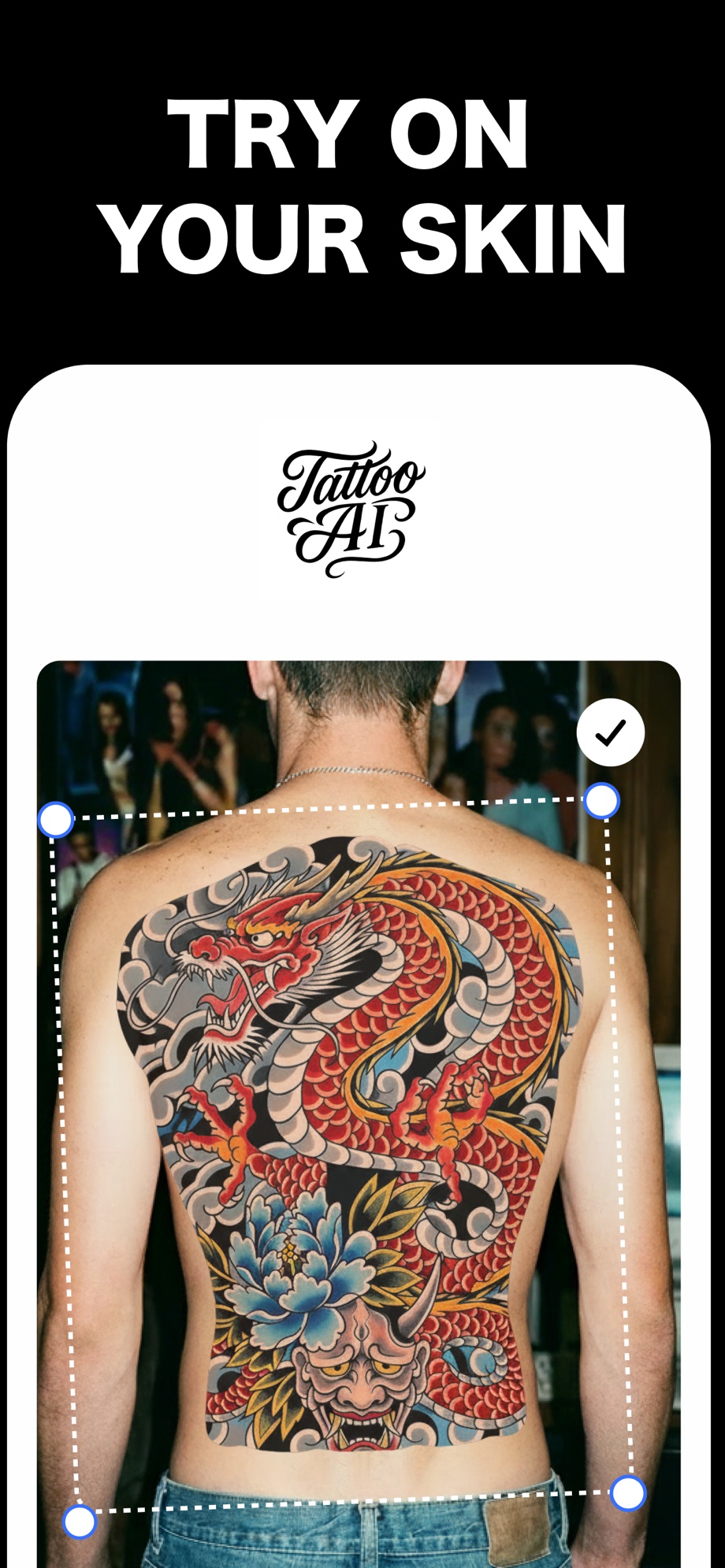
You can debate placement in your head for weeks, or you can look at it. Seeing the same design on your forearm, your shoulder, and your ribs settles the question in minutes. That's what Tattoo AI does:
- Get the design — generate one from a text description in any of 16 styles, or upload a design you already have.
- Photograph the candidate spots — forearm, shoulder, ribs, wherever you're torn between.
- Place it on each photo — resize and rotate until it sits naturally. One spot will click and the others won't.
- Check the runner-up — if two spots both work, factor two and three above break the tie.
Free on the App Store · iPhone & iPad