What should you know before getting your first tattoo?
The short answer: choose an artist by their healed work in your style, expect a deposit when you book, and show up fed, hydrated, and sober. The pain is a sharp scratch that's very manageable on spots like the outer forearm or upper arm; a first piece usually takes 1–3 hours. Tip 15–20%, follow aftercare exactly for 2–4 weeks, and decide your design and placement before the chair — not in it.
Choosing the artist (this is 80% of the outcome)
- Look at healed work, not fresh photos. Fresh tattoos are shot under studio light minutes after finishing — everything looks crisp. Ask for or scroll for healed photos, months out. That's what you'll actually wear.
- Match the style. A great Realism artist is not automatically a great Script artist. Find someone whose portfolio is full of the style you want.
- Verify the basics. Licensed shop, single-use needles, artist happy to answer questions. Any defensiveness about hygiene is a walk-away signal.
- Do the consultation. Most artists offer a free 15–30 minute consult. Bring your reference, discuss size and placement, and notice whether they push back thoughtfully. Good artists say "that won't age well there" — that's expertise, not obstruction.
Booking and deposits
Expect a deposit of roughly $50–$200 (or a percentage on large work) to hold the appointment. It's normal, it usually comes off the final price, and it's typically non-refundable if you no-show. Popular artists book weeks to months out. Hourly rates vary widely by city and reputation — ask up front, and treat a quote that seems too cheap as information.
Decide before the chair
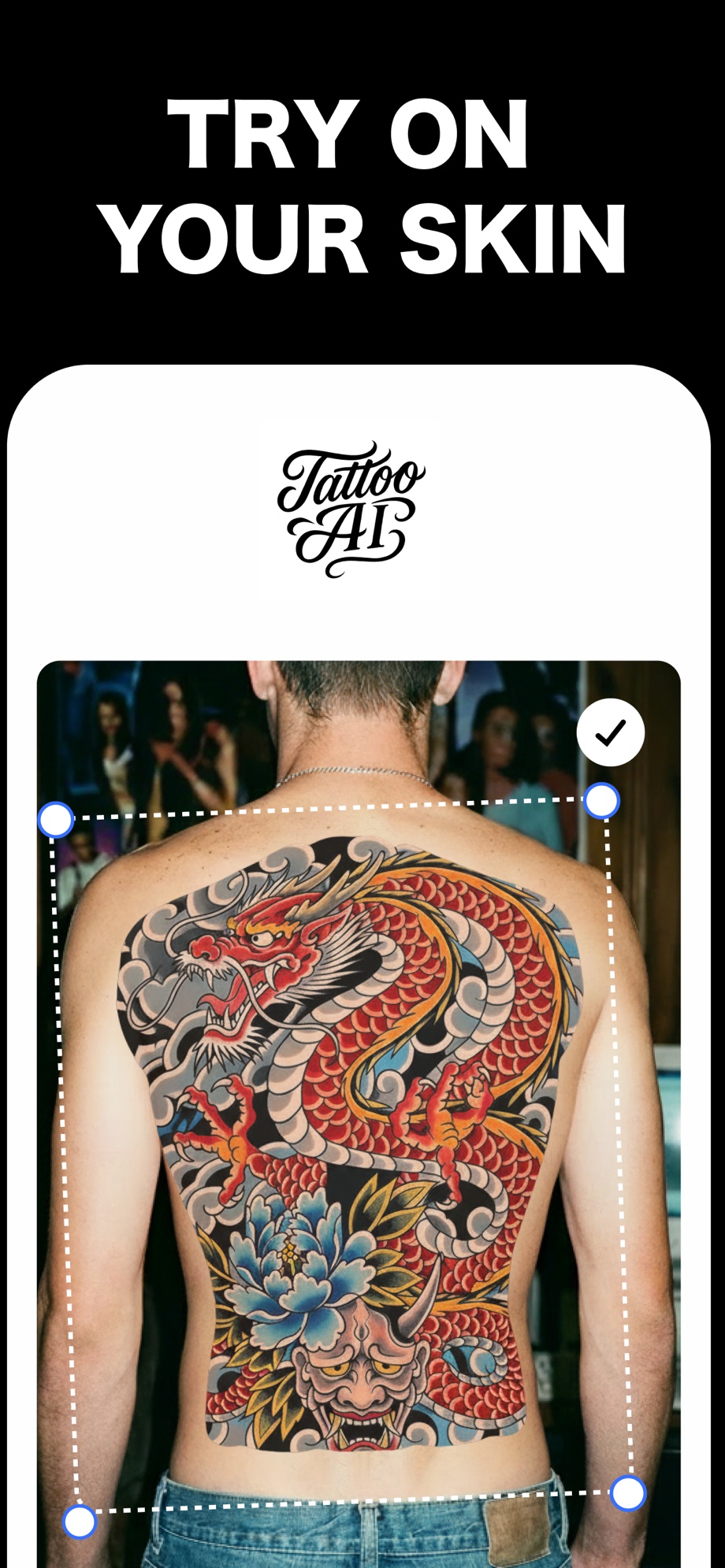
The worst place to make design decisions is lying on the table with a stencil on. Settle the design and the exact placement before your appointment. The cheapest way to do that is to preview it: take a photo of the spot, place the actual design on it at actual size, and live with it for a week. Tattoo AI does this free on iPhone and iPad:
- Get the design ready — generate one from a description in any of 16 styles, or upload the reference your artist agreed on.
- Photograph the spot — the exact placement you're planning, in natural posture.
- Place, resize, rotate — see it at true size on your own skin and check it against clothing lines.
- Compare a backup spot — first-timers often start on the outer forearm or upper arm; try your design on both before you decide.
The day of: prep that actually matters
- Eat a real meal 1–2 hours before. Low blood sugar is the #1 reason first-timers get lightheaded.
- Hydrate the day before and morning of — hydrated skin takes ink better.
- No alcohol or aspirin for 24 hours before. Both thin your blood, which means more bleeding and a harder session.
- Wear clothes that expose the spot — shorts for a thigh piece, a tank for an upper arm. Dark colors, since ink splatters.
- Bring water, a snack, and headphones for anything over an hour.
What it feels like, and how long it takes
Most people describe it as a hot scratch or a cat scratch that doesn't stop — annoying, not unbearable. Placement drives it: the outer forearm, upper arm, shoulder, and outer thigh are the easy spots, while ribs, sternum, spine, armpit, hands, feet, and knees or elbows genuinely hurt. A palm-sized first piece typically runs 1–3 hours, including setup and stencil placement. The first ten minutes are the worst; your body adjusts after that.
It's OK to ask for a break — and OK to say stop. Artists take breaks on long sessions as a matter of course. And if you're at your limit, an unfinished session that resumes in two weeks is completely normal. Pushing through shaking or nausea helps no one.
Tipping and aftercare
Tip 15–20% in the US, more if the artist went above and beyond. On aftercare: follow your artist's instructions over anything you read online, including this. The universal basics: keep it clean with fragrance-free soap, moisturize thinly, no swimming or soaking for 2 weeks, no direct sun, and don't pick the peeling skin. Full surface healing takes 2–4 weeks; deeper healing takes months. SPF on it forever after that.
Free on the App Store · iPhone & iPad