Forearm tattoos: ideas, pain, and why it's the best first spot
The short answer: forearm tattoos barely hurt — the outer forearm rates 3–4 out of 10 thanks to muscle padding and fewer nerve endings, making it one of the least painful spots on the body. The inner forearm is slightly more sensitive but still easy. Combine low pain with easy healing, good aging, and controllable visibility, and the forearm is the best first-tattoo real estate there is.
Why the forearm wins for a first tattoo
- Low pain. 3–4/10 on the outer side. Muscle absorbs the needle; there's no bone directly under most of the canvas. Compare that to ribs at 9.
- Easy healing. No friction from waistbands or bra lines, easy to wash, easy to keep out of the sun for two weeks. You can also watch the whole process instead of craning at a mirror — which most first-timers find calming.
- Easy for the artist. Flat-ish, stable, accessible from a comfortable seated position. Artists do their cleanest work on forearms.
- Ages well. Low friction and thick, stable skin hold detail for decades. Just use SPF once it's healed — forearms see sun.
- Visibility on your terms. Short sleeves show it, long sleeves hide it completely. You decide per-day, which is exactly the flexibility hand tattoos never give you.
Outer vs inner forearm
| Outer forearm | Inner forearm | |
|---|---|---|
| Pain | 3–4 / 10 | 4–5 / 10 — softer, more sensitive skin |
| Who sees it | The world — it faces out | You — it faces you all day |
| Best for | Statement pieces, bold designs, wraps | Script, mementos, dates, reminders |
| Skin | Thicker, some hair | Softer, paler, veins visible |
The facing question matters more than the pain difference. A memorial date or a one-word reminder belongs on the inner forearm, where you'll read it a dozen times a day. A design you want the world to see belongs on the outer. Decide who the tattoo is for before you decide which side.
What suits the vertical canvas
The forearm is a long, narrow, slightly tapered cylinder. Design for that:
- Vertical compositions — arrows, swords, botanical stems, single-line script running wrist-to-elbow. The classic forearm move.
- Wraps — bands, snakes, and patterns that circle the arm use the cylinder instead of ignoring it.
- Banners and lettering — the forearm reads like a scroll; script sits naturally along its length.
- Sleeve starters — most sleeves begin as one strong forearm piece that grows. If a sleeve is even a maybe, tell your artist now so the first piece leaves room to build.
What fights the canvas: wide horizontal designs. A landscape-format piece wraps out of view around the arm and reads as a fragment from every angle.
Sizing: bigger than your instinct
First-timers consistently size down out of caution, then regret it. A tiny design floats awkwardly in the middle of a long canvas. A good forearm piece uses most of the length — roughly wrist-to-elbow for a statement piece, or at least half of it for a medium one. Small designs aren't wrong on a forearm, but they read best near the wrist, not marooned mid-arm. Your artist will push you slightly bigger; they're usually right.
The work reality check
Be honest about your industry before committing to the outer forearm. In most workplaces in 2026, a visible forearm tattoo is a non-issue. But client-facing corporate roles, law, and some healthcare settings still expect covered ink — which means long sleeves every workday, forever, in every summer. If that sounds miserable, go inner forearm (hidden when your arms are at your sides) or upper arm. If your field genuinely doesn't care, the outer forearm is yours.
Try it on your actual forearm at actual size
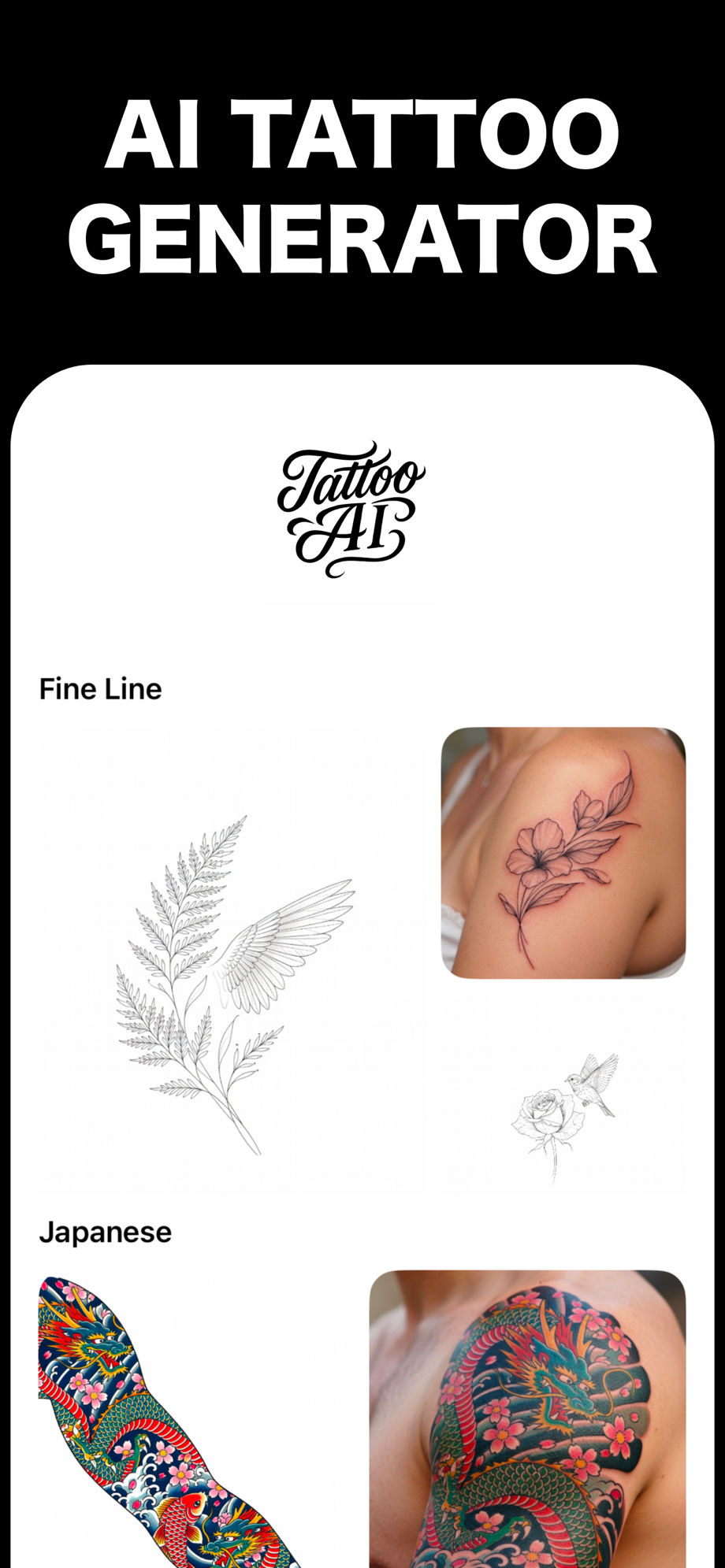
The forearm is the easiest placement to preview honestly, because you can photograph it yourself. Tattoo AI puts the design on your arm before any needle does:
- Photograph your own forearm — outer and inner, in normal light.
- Try 2–3 generated designs — describe your idea, generate it in any of 16 styles, or upload a design you already have.
- Place each at real scale — resize and rotate until it uses the canvas. Too-small becomes obvious immediately.
- Check it sleeved and unsleeved — take a photo with your sleeve rolled and one rolled down partway. You're testing the visibility you'll actually live with.
Free on the App Store · iPhone & iPad