Tattoo trends for 2026: what artists are actually booking
The short answer: 2026's booked work skews two directions at once — very small and very precise (micro-realism, single-needle botanicals, fine-line script) or very bold and very graphic (blackwork panels, ignorant style, neo-tribal). The middle ground — mid-size color pieces with soft edges — is the thing artists say they're doing least. Of everything on this list, the bold graphic work is what still looks intentional in twenty years.
Trend lists usually describe what's popular on a moodboard, which is a different thing from what's popular on skin. A design can be all over your feed and almost never get booked, because it doesn't survive contact with a real body, a real budget, or a real healing process. So here's the split: what's actually moving, why, and the honest note on how each one ages.
1. Micro-realism is eating the small-tattoo category
Tiny photographic pieces — a two-inch portrait, a miniature landscape, a pet's face at the size of a coin — went from novelty to a specialty artists build entire books around. The appeal is obvious: it reads as jewelry from a distance and as a full artwork up close, and it fits placements that used to be reserved for symbols.
The honest note: this is the highest-skill, shortest-half-life work on the list. Micro-realism packs enormous detail into a space where ink spread has nowhere to go. Expect it to soften noticeably inside a decade and plan for touch-ups. If that trade is fine with you, it's fine — just don't get sold the idea that it holds like a bold piece. Our guide on how tattoos age covers the mechanics.
2. Blackwork is having a second wave — and it's the durable one
Large solid black fields, ornamental panels, heavy geometric structure. Blackwork never went away, but it's back in a specific form: bigger, more architectural, designed to wrap a limb rather than sit on it.
This is the one trend on the list we'd bet on aesthetically and physically. Solid black is the most stable thing you can put in skin — there's no gradient to blur and no fine gap to close. A well-executed blackwork sleeve looks nearly the same at year fifteen as at year two. If you want a trend that isn't a gamble, this is it.
3. "Ignorant style" went mainstream, and mainstream ruined half of it
Deliberately crude line drawings — wobbly, naive, funny, like something doodled on a napkin. Born as a reaction against technically perfect tattooing, and genuinely charming when it's done by someone who chose to draw that way.
The problem is that "looks easy" attracted a lot of people for whom it wasn't a choice. There's a real difference between an intentionally naive line and a shaky one, and it shows up immediately. If you want this, look at an artist's other work first. If they can execute clean, their crude is a style. If they can't, it's just crude.
4. Single-session sleeves and "one big day" bookings
A scheduling trend more than an aesthetic one, but it's changing what gets designed. Artists are increasingly offering 8–10 hour marathon days that deliver a substantial connected piece in one sitting rather than eight appointments across a year.
This pushes design toward bold, high-contrast, structurally simple work — because that's what can actually be finished in a day and heal as one unit. It's a quiet reason blackwork and neo-tribal are surging: they fit the format.
5. Fine-line script is still enormous, and still the riskiest thing people book
Delicate cursive on the ribs, collarbone, inner arm, forearm. It is not going anywhere, and it remains the single most common thing people come back to fix.
The failure mode is always the same: too small, letters too tightly spaced, on a high-movement placement. Ink spreads a fraction of a millimeter in every direction over the years, and in tight script that fraction is the gap between two letters. Size it up, space it out, and put it somewhere with less stretch. More in our script tattoo guide.
6. Neo-tribal, but sourced properly
Bold black abstract forms — flowing, spiky, organic — descended from '90s tribal but redrawn as contemporary abstraction rather than borrowed motif. When it's original abstract work, it's some of the best-aging tattooing available. When it's a lifted Polynesian or Maori pattern with the meaning stripped out, that's a different conversation, and one worth having with an artist connected to the source culture.
What's cooling off
- Watercolor without outlines. Still gorgeous fresh. Still the fastest-fading thing on the menu. Artists are increasingly adding a structural line layer underneath — take them up on it.
- Tiny wrist and finger micro-tattoos. High regret category, not because of the design but because of the placement. Fingers get more wear than any other skin on your body.
- Hyper-saturated color realism. Beautiful, expensive, and the color component ages considerably harder than the black-and-grey version of the same piece.
The only trend advice that matters
A tattoo trend is a fashion cycle attached to a permanent object. That mismatch is the whole problem. The useful filter isn't "is this popular" — it's "would I have wanted this five years ago, and can I picture wanting it in five more?"
The second filter is physical: bold structure lasts, delicate detail doesn't. Every item on this list obeys that rule. Nothing about a trend exempts it.
See it on you before you decide
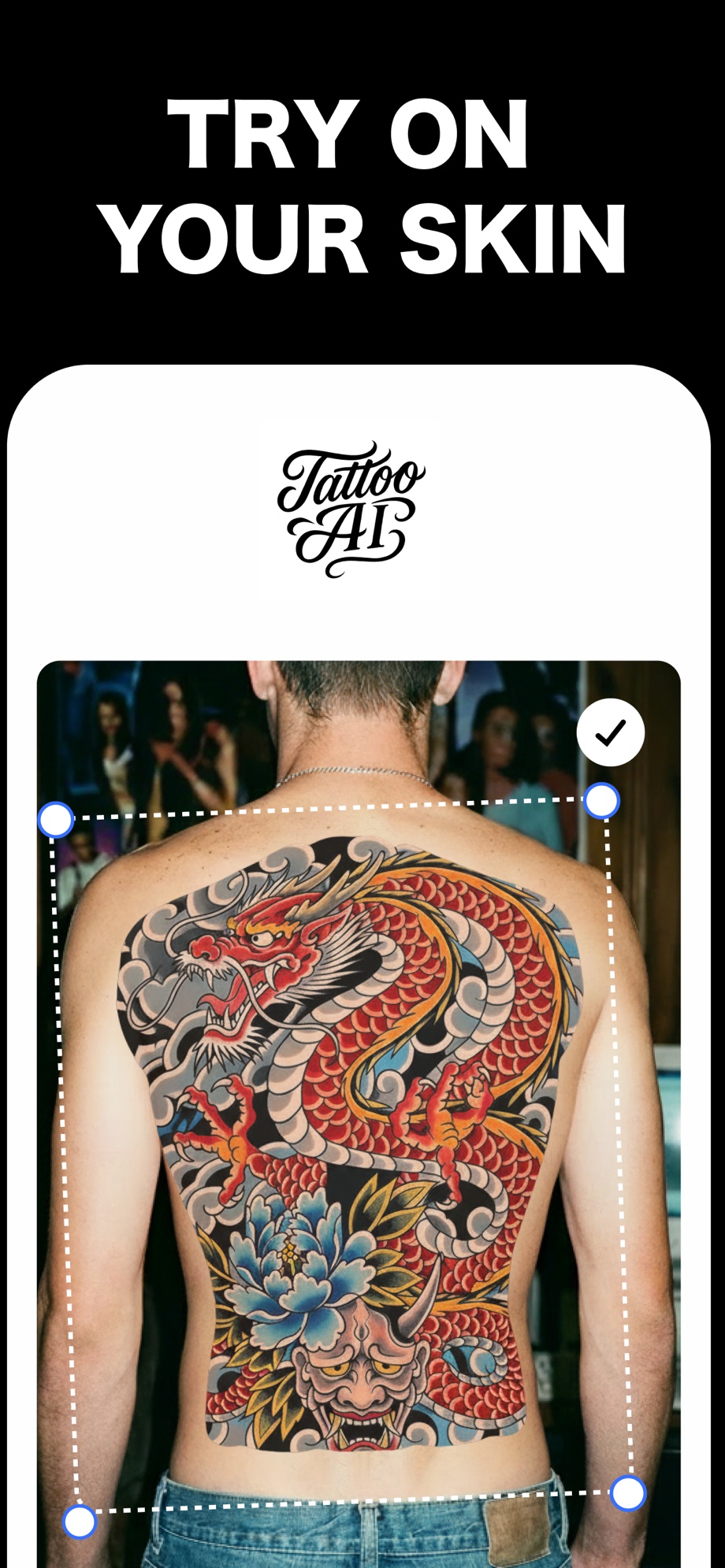
The fastest way to kill a bad trend decision is to look at it on your own body at real size. That's the entire reason we built Tattoo AI:
- Describe the idea — the trend you're curious about, in your words.
- Generate it in the styles you're weighing — run the same concept as blackwork, as fine line, as micro-realism, and compare directly.
- Place it on a photo of your actual arm, ribs, or back — resize and rotate until it sits where you'd really put it.
- Sit with it for a week. Trends fail this test constantly. Ideas you actually want don't.
Free on the App Store · iPhone & iPad