Do rib tattoos hurt?
The short answer: yes — rib tattoos rate 9 out of 10 on most pain charts, among the most painful placements alongside the armpit and sternum. The skin over your ribs is some of the thinnest on your body, there's no muscle or fat between needle and bone, and your breathing moves the canvas the entire session. People choose ribs anyway because it's a large, flowing, private canvas that holds ink well.
Why ribs hurt this much
Three things stack against you. First, the skin over your ribcage is thin — the needle's vibration transmits straight into bone. Second, there's no padding: on your outer forearm, muscle absorbs the impact; on your ribs, nothing does. Third, you breathe. Every inhale stretches and shifts the exact skin being tattooed, which means you feel the needle differently on every breath, and your artist has to work with a moving target.
The sensation is the standard scratching-a-sunburn feeling of any tattoo, turned up — sharper over the bones themselves, hot and raw in between. And like every tattoo, it gets worse past the two-hour mark as adrenaline fades.
Rib sessions run slower
Budget more time than the same design would take elsewhere. Stencil placement on ribs is genuinely tricky — the design has to read correctly whether you're standing, twisting, or breathing in, so expect your artist to place, check, wipe, and re-place. Breaks are frequent because most people need them. Artists also work more deliberately on skin that moves. A piece that would be a two-hour forearm sit can stretch well past three on ribs.
For larger rib pieces, ask about splitting into multiple sessions. Two three-hour sits beat one six-hour endurance test: your skin gets a healing window, your artist gets fresh line work instead of tattooing inflamed skin, and you're not making pain-clouded decisions in hour five. Most artists will suggest it before you ask.
Why people choose ribs anyway
- The canvas. The ribcage is one of the largest uninterrupted flowing surfaces on your body. Designs can breathe and curve in a way a forearm never allows.
- Privacy. A rib piece is invisible in every work setting and visible exactly when you choose. No visibility compromise at all.
- Designs that follow the curve. Some ideas only work on ribs — a floral vine tracing the ribline, script following the curve, a koi wrapping the torso.
What designs suit ribs
Flowing and organic wins: florals, waves, dragons, birds, smoke, script set along the curve of the ribline. The design should move the way the body moves. Rigid geometry — straight-edged frames, precise mandalas, hard grids — fights the ribcage. It's difficult to execute on curved, breathing skin, and any distortion shows immediately on a straight line that shows nowhere on an organic one.
How rib tattoos age
Honestly, well. Ribs get almost no sun and almost no friction — the two things that fade tattoos fastest. Skin there stays relatively stable through weight changes compared to the stomach. Pay the pain once and the piece holds detail for decades. Compare that to hands and fingers, which are easy canvases that fade fast — ribs are the inverse.
How to prep for a rib session
- Sleep well, eat a real meal an hour or two before, and bring water and a snack for breaks.
- No alcohol the night before or the day of — it thins your blood and makes everything worse.
- Wear clothing you can comfortably remove or shift on the tattooed side.
- Practice slow, steady breathing — your artist will tell you when to hold and release.
- Numbing cream is an option some artists accept for ribs. Ask yours first; don't apply anything without their OK.
Confirm the design follows your curve — before you pay to find out
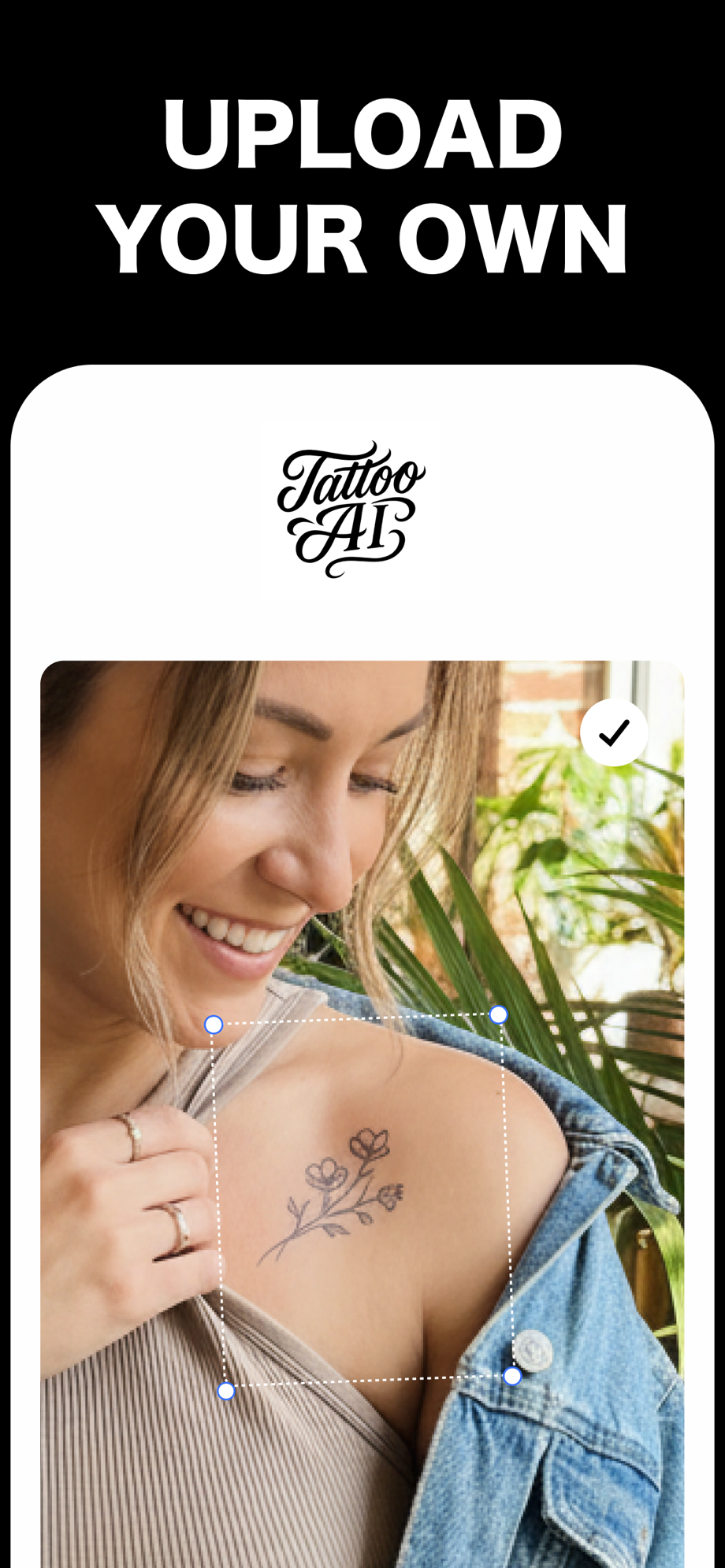
A rib design lives or dies on how it sits against your specific ribcage. Tattoo AI lets you check on your own body first:
- Get the design — generate it from a text description in any of 16 styles, or upload one you already have.
- Photograph your ribcage — arm raised, the pose the tattoo will actually live in.
- Place, resize, and rotate it along the curve. If it reads as flowing on your photo, it'll flow in ink. If it looks stiff or fights the ribline, fix the design now — not in the chair.
- Sanity-check a low-pain alternative — try the same design on a thigh or upper-arm photo. If it works just as well there, that's worth knowing before a 9/10 session.
Free on the App Store · iPhone & iPad